In the competitive world of custom sheet metal fabrication, quality is more than a buzzword — it’s a defining factor that separates exceptional fabricators from the rest. Every client, whether from aerospace, construction, electronics, or automotive industries, demands precision, consistency, and reliability in every part produced.
To meet those expectations, manufacturers must follow well-defined processes that not only ensure product quality but also promote efficiency and continuous improvement. This is where ISO 9001:2015, the international standard for quality management systems, plays a pivotal role.
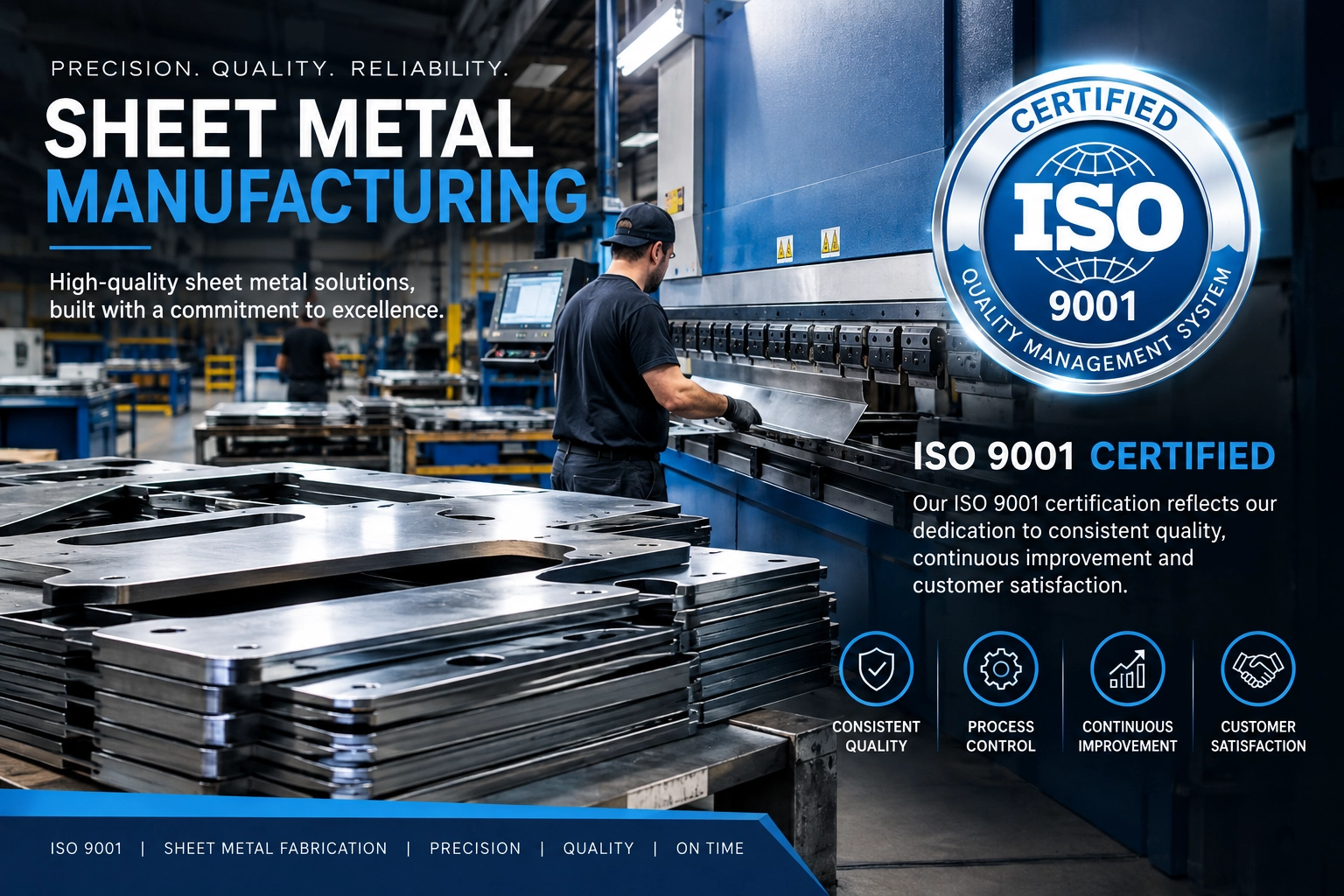
For companies specializing in custom sheet metal fabrication, achieving and maintaining ISO 9001:2015 certification demonstrates a strong commitment to quality, process control, and customer satisfaction. It tells clients that the company doesn’t just claim to produce quality work — it follows proven, globally recognized systems to back it up.
Understanding ISO 9001:2015
Before exploring its impact on sheet metal fabrication, it’s essential to understand what ISO 9001:2015 really is.
ISO stands for the International Organization for Standardization, an independent, non-governmental international body that develops standards to ensure the quality, safety, and efficiency of products and services. The “9001” part refers to the specific standard related to quality management systems (QMS), and 2015 represents the year of the most recent revision.
ISO 9001:2015 outlines the requirements for establishing a QMS — a framework that helps organizations consistently meet customer and regulatory requirements. Unlike technical standards that dictate product specifications, ISO 9001:2015 focuses on how a company operates — how it plans, executes, measures, and improves its processes to achieve consistent results.
At its core, ISO 9001:2015 is built around seven quality management principles:
– Customer focus
– Leadership
– Engagement of people
– Process approach
– Improvement
– Evidence-based decision making
– Relationship management
– Each principle contributes to building a system where quality is ingrained in every stage of production.
How ISO 9001:2015 Transforms Sheet Metal Fabrication Operations
Custom sheet metal fabrication is an intricate process involving multiple operations — design, prototyping, cutting, punching, bending, forming, welding, finishing, and assembly. Each step requires precision and seamless coordination among technicians, engineers, and quality inspectors.
Even a minor deviation can lead to part failure, wasted materials, or production delays. ISO 9001:2015 helps mitigate these risks by ensuring that every process is controlled, documented, and continuously improved.
Here’s how ISO 9001:2015 directly benefits custom sheet metal fabrication companies:
1. Standardizing Processes Across All Departments
ISO 9001:2015 mandates a process-based approach, meaning every activity within the organization is viewed as part of a larger system that contributes to the final outcome.
For example, quoting, design verification, raw material procurement, and inspection are all interconnected processes. By standardizing these activities, fabrication shops eliminate guesswork and ensure that everyone follows consistent procedures.
This consistency reduces rework and enhances efficiency. Employees know exactly what is expected, how to perform each step, and how to document results.
Example:
Before ISO implementation, two technicians might use slightly different techniques to set up a CNC laser cutter, resulting in inconsistent edge quality. After ISO certification, there’s a documented, approved method — ensuring every technician achieves identical results every time.
2. Emphasizing Risk-Based Thinking
One of the most significant updates in ISO 9001:2015 compared to its predecessors is the emphasis on risk-based thinking.
In sheet metal fabrication, potential risks can include:
– Incorrect material selection
– Machine calibration errors
– Design interpretation mistakes
– Inadequate welding parameters
– Supply chain disruptions
ISO 9001:2015 requires companies to identify, evaluate, and mitigate such risks proactively. Instead of reacting to issues after they occur, fabrication teams analyze data and implement preventive measures early in the process.
This approach not only reduces scrap and downtime but also enhances the reliability of every fabricated component.
3. Enhanced Quality Control and Inspection
ISO 9001:2015 promotes the use of data-driven quality management. In fabrication environments, this translates into rigorous inspection plans, statistical process controls, and traceability systems that track every part through production.
From initial design approval to final dimensional inspection, quality checks are embedded throughout the workflow. Every measurement, deviation, or non-conformance is recorded, analyzed, and used for continuous improvement.
For instance, if a batch of laser-cut panels shows minor inconsistencies, ISO 9001:2015 ensures that corrective actions — such as re-calibrating the machine or adjusting nesting parameters — are documented and verified for effectiveness.
4. Strengthening Supplier and Material Management
The quality of a fabricated product heavily depends on the quality of raw materials. ISO 9001:2015 requires companies to establish clear procedures for supplier selection, evaluation, and performance monitoring.
Fabrication shops must ensure that suppliers consistently provide materials that meet required specifications — whether it’s stainless steel, aluminum, or galvanized sheet metal.
This level of oversight creates a reliable supply chain and guarantees that all materials entering the shop floor are traceable and compliant with design requirements.
5. Promoting Employee Engagement and Training
A successful ISO 9001:2015 system is not just about documentation — it’s about people.
The standard encourages employee participation at all levels, empowering them to identify inefficiencies, propose improvements, and take ownership of quality outcomes.
In custom sheet metal fabrication, where skilled craftsmanship is essential, trained and motivated employees make a tangible difference. Operators who understand the importance of calibration, tolerances, and inspection procedures are far more likely to produce consistent, high-quality results.
Additionally, ISO-certified organizations invest in ongoing training programs that keep staff updated on the latest fabrication technologies, safety protocols, and quality practices.
6. Improving Customer Satisfaction
At the heart of ISO 9001:2015 lies customer satisfaction.
The standard requires organizations to clearly understand customer needs, translate them into technical requirements, and verify that deliverables meet those expectations.
In custom sheet metal fabrication, this can mean:
– Delivering parts that meet exact tolerances
– Ensuring cosmetic finishes match specifications
– Meeting deadlines without compromising quality
– Providing transparent communication and documentation
When a fabrication company consistently meets or exceeds customer expectations, it earns repeat business and strengthens its reputation in the industry.
7. Driving Continuous Improvement
ISO 9001:2015 is designed for continuous improvement, not static compliance.
Fabrication shops conduct regular internal audits, management reviews, and performance evaluations to identify opportunities for optimization. This could include:
– Streamlining workflows
– Reducing waste
– Upgrading equipment
– Refining quality metrics
Continuous improvement not only increases productivity but also positions the company to adapt quickly to new technologies and market demands — crucial in a fast-evolving manufacturing environment.
The Competitive Edge of ISO 9001:2015 Certification
For custom sheet metal fabricators, achieving ISO 9001:2015 certification offers more than just an internal quality framework — it provides a strategic business advantage.
Here’s why:
– Enhanced Credibility: ISO certification is globally recognized and demonstrates that the company adheres to the highest quality standards.
– Access to New Markets: Many industries — especially aerospace, defense, and medical — require ISO certification as a prerequisite for supplier qualification.
– Operational Efficiency: Streamlined processes reduce waste, rework, and production costs.
– Employee Confidence: A clear, structured system promotes accountability and teamwork.
– Customer Trust: Clients are more likely to choose a certified partner who consistently delivers reliable, traceable, and compliant products.
In a competitive market, ISO certification often becomes the deciding factor when clients evaluate potential vendors.
Implementing ISO 9001:2015 in a Fabrication Environment
Transitioning to an ISO-certified operation involves more than passing an audit — it’s about integrating the standard’s principles into the company’s culture.
Step 1: Conducting a Gap Analysis
Before pursuing certification, fabrication shops perform a gap analysis to compare their current processes with ISO requirements. This identifies areas that need improvement — such as documentation, training, or process control.
Step 2: Developing the Quality Management System
Next, companies create or update their QMS, documenting every process, procedure, and responsibility. This often includes:
– Quality policy and objectives
– Process flow diagrams
– Non-conformance and corrective action procedures
– Internal audit schedules
Step 3: Employee Training and Engagement
Employees must understand why ISO 9001:2015 matters and how it impacts their daily tasks. Training sessions ensure alignment and foster a shared commitment to quality.
Step 4: Internal Audits
Before the external certification audit, companies perform internal audits to verify compliance and identify issues that need correction.
Step 5: Certification Audit
An accredited third-party auditor reviews the QMS for compliance with ISO 9001:2015 standards. Upon successful completion, the company receives certification valid for three years, subject to annual surveillance audits.
Real-World Benefits: Beyond Compliance
Many fabrication companies that implement ISO 9001:2015 report tangible improvements within months. Common results include:
– 20–30% reduction in rework and scrap
– Shorter lead times through process optimization
– Increased customer retention rates
– Improved documentation for traceability and audits
– Stronger interdepartmental communication
For example, a sheet metal fabrication shop that introduced ISO-based process mapping discovered inefficiencies in how projects moved between design and production. By re-engineering that workflow, they reduced turnaround times by nearly 25%, boosting both capacity and profit margins.
ISO 9001:2015 and Industry 4.0 — A Perfect Match
As manufacturing continues to embrace digital transformation, ISO 9001:2015 aligns perfectly with the principles of Industry 4.0 — automation, data analytics, and smart production.
The standard’s focus on evidence-based decision making complements modern technologies like:
– IoT-enabled equipment monitoring
– Real-time quality data tracking
– Predictive maintenance analytics
By integrating ISO systems with digital tools, fabrication companies can achieve data-driven quality management, enabling faster decisions and continuous performance improvement.
Challenges and Misconceptions
While ISO 9001:2015 delivers undeniable benefits, some companies hesitate to pursue certification due to misconceptions:
- “It’s just paperwork.”
In reality, ISO emphasizes meaningful documentation — not bureaucracy. Every document serves a purpose: to ensure consistency and traceability. - “It’s too expensive.”
While certification involves upfront investment, the long-term savings from reduced waste, fewer defects, and improved efficiency often outweigh the costs. - “It slows down production.”
On the contrary, standardized processes streamline workflows and minimize disruptions, increasing productivity.
Successful ISO implementation is less about ticking boxes and more about building a culture of accountability and improvement.
Conclusion: Building Trust Through Quality
In today’s demanding manufacturing landscape, ISO 9001:2015 certification is more than an optional credential — it’s a symbol of commitment to quality, reliability, and continuous improvement.
For custom sheet metal fabricators, where precision and performance are critical, ISO certification provides a structured foundation for excellence. It ensures that every product, process, and person contributes to consistent, measurable results.
By embracing ISO 9001:2015, fabrication companies like Blackstone Advanced Technologies not only improve internal efficiency but also build lasting trust with their customers — and that trust is the ultimate differentiator in a crowded marketplace.
In short, ISO 9001:2015 isn’t just a standard — it’s a roadmap to sustainable success in custom sheet metal fabrication.
Blackstone Advanced Technologies team is trained to continuously assess product quality. Your project will have access to our:
– 200+ years of sheet metal engineering experience
– AWS Certified & Qualified Welders
– AWS Certified WELD Inspectors
– Former General Dynamics Source Inspector
– ASQC-CQE
At Blackstone, use our expertise and capabilities. Get in touch with us today, and obtain a great product from your project.
Discover more from Blackstone Advanced Technologies, LLC
Subscribe to get the latest posts sent to your email.